


Let’s picture a scenario
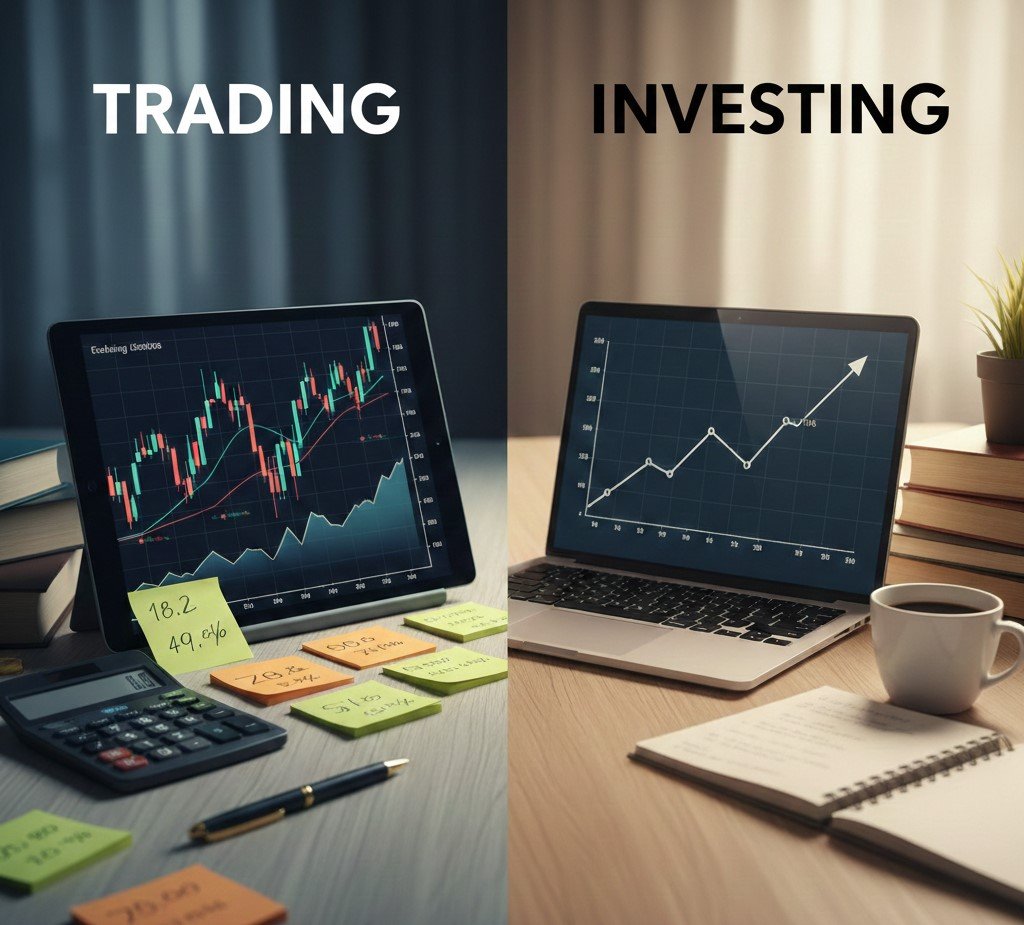
Two people walk into the same market on the same day. One buys a few shares of a company and walks away. The other sits at a screen, watching numbers flicker, buying and selling several times before lunch.
Both are using the stock market. Both hope to make money. But they’re playing completely different games.
If you’re new to all this, the words “trading” and “investing” probably get thrown around like they mean the same thing. They don’t. Confusing them is one of the fastest ways to lose money and feel frustrated.
Let’s clear this up for good.
The Coffee Shop Conversation That Explains Everything
Imagine you’re at a coffee shop with two friends.
Friend One buys a small apartment building in a growing neighborhood. She fixes it up, finds good tenants, and holds onto it for fifteen years. The neighborhood improves. Property values rise. Rent increases slowly over time. She collects rent checks every month and eventually sells the building for way more than she paid.
That’s investing.
Friend Two buys a fixer-upper house, spends three months renovating it, and sells it for a profit. Then he does it again with another house. And again. He’s not interested in holding property long-term. He wants to buy, improve, and sell quickly.
That’s trading.
Both can make money. Both involve real estate. But the mindset, the work, and the risks are completely different.
Stocks work the same way.
What Investing Actually Looks Like
Investing is the slow lane. And for most people, that’s exactly where they belong.
When you invest, you’re buying a piece of something because you believe in its long-term value. You think the company will grow over years. You think the economy will expand over decades. You’re willing to wait through ups and downs because history shows that patient money tends to win.
The mindset: You’re an owner. When you buy stock in a company, you own a tiny slice of that business. You care about whether they’re making good products, serving customers well, and staying profitable over time.
The time frame: Years. Decades. Sometimes forever. Some investors buy stocks and never sell them, passing them down to kids or grandkids.
The activity level: Low. Once you’ve bought, you mostly just hold. You might check in every few months. You might add money regularly. But you’re not constantly moving in and out.
What matters to you: Earnings reports. Company leadership. Industry trends. Whether people will still need this company’s products ten years from now.
Real example: Maya started investing at twenty-five. She bought shares of a few companies she believed in plus an index fund that tracked the whole market. Some years her account went down. Some years it went way up. She kept buying a little every month regardless. By forty-five, she had a substantial portfolio without ever feeling like she was gambling.

What Trading Actually Looks Like
Trading is a different animal entirely.
When you trade, you’re not trying to own companies for the long haul. You’re trying to profit from price movements. Up, down, sideways, it doesn’t matter, as long as you can predict the direction and make a quick move.
The mindset: You’re a hunter. You’re looking for opportunities. You don’t care deeply about whether a company makes great products. You care about whether its stock price is likely to rise in the next few days or weeks.
The time frame: Short. Days. Weeks. Maybe a few months. Some traders open and close positions within hours or even minutes.
The activity level: High. Trading requires attention. You’re watching charts, following news, setting alerts, and making decisions constantly.
What matters to you: Price patterns. Trading volume. Market sentiment. News that might move a stock quickly. Technical indicators that suggest when to buy and when to sell.
Real example: David trades part-time while working a regular job. He focuses on five companies he knows well. He watches for patterns he’s learned over time. When he sees a setup he recognizes, he buys and sets a target price. If it hits that price in a few days, he sells. Sometimes he’s right. Sometimes he’s wrong. He keeps his trades small so no single loss hurts too much.
The Key Differences Laid Out Simply
Let’s put this side by side so you can see clearly.
| Area | Investing | Trading |
|---|---|---|
| Time horizon | Years to decades | Days to months |
| Why you buy | You believe in the company’s future | You see an opportunity for quick profit |
| How often you act | Occasionally | Frequently |
| What you watch | Company earnings, industry trends | Price charts, news, market mood |
| Typical results | Steady growth over time | Wins and losses that average out |
| Emotional experience | Boring mostly, occasional anxiety during market drops | Intense, stressful, exciting |
| Skill needed | Patience, basic research | Discipline, quick decisions, risk management |
Which One Is Right for You?
Here’s the honest answer. It depends on who you are.
Investing fits you if:
-
You have a job and don’t want to stare at screens all day
-
You prefer steady progress over thrilling wins
-
You believe the economy grows over time
-
You want to build wealth without constant stress
-
You’re okay with some down years because you know up years follow
Trading might fit you if:
-
You find markets genuinely fascinating
-
You have time to watch and learn
-
You can handle losses without panicking
-
You enjoy patterns and strategy
-
You’re willing to put in real work to learn a skill
Notice something important. Trading isn’t better than investing. It’s just different. And for most people, most of the time, investing makes more sense.

The Mistake Beginners Make
Here’s what happens constantly.
Someone new hears about a friend who made quick money trading. They get excited. They open an account. They start buying and selling based on tips or hunches. Maybe they get lucky once or twice. Then they lose money and feel confused about why the market is so hard.
The problem wasn’t the market. The problem was playing the wrong game.
Trading without experience is like jumping into a swimming race when you’ve barely learned to float. You might make it across once. But consistently? Against people who’ve been doing it for years? Probably not.
The smarter path is simple.
Start as an investor. Learn how markets work. Watch how companies behave. Feel what it’s like when your holdings drop and recover. Build that foundation over a year or two.
Then, if you’re still curious about trading, start tiny. Use money you could lose without stress. Experiment. Learn. See if the trading style actually fits your personality and life.
Most people try trading and realize they prefer investing. Some discover they love trading and get good at it. Both outcomes are fine because both came from learning, not guessing.
A Few Practical Guidelines
For investing:
-
Buy things you understand at least a little
-
Spread your money across different companies and types
-
Add money regularly, not just when you feel like it
-
Ignore short-term noise. Really. Turn off the notifications.
For trading (if you go that route):
-
Start with a small amount you’re okay losing
-
Have a plan for every trade before you enter it
-
Know when you’ll sell before you buy
-
Keep records of every trade so you can learn
-
Never chase losses by doubling down
The Bottom Line
Investing and trading sit on opposite ends of the same street. Both can get you where you’re going. But they require different vehicles, different fuel, and different mindsets.
Investing asks for patience and trusts time. Trading asks for attention and trusts skill.
Neither is evil. Neither is magic. Both are just tools.
The trick is knowing which tool fits your hands. And being honest about which game you’re actually equipped to play.
For most beginners, that game is investing. Slow, steady, boring investing. The kind that builds wealth while you sleep, work, raise kids, and live your life.
Trading will still be there later if you want it. But starting with investing gives you something priceless: time to learn without the pressure of watching every tick.
Choose your game. Play it well. And ignore anyone who tells you their way is the only way.
