



Introduction
Understanding the difference between needs and wants is one of the most important skills in personal finance. Many beginners struggle because they spend money on wants first and neglect essential needs or savings.
Needs vs wants budgeting is a simple strategy to control spending, save money, and achieve financial goals.
In this guide, you’ll learn:
- The difference between needs and wants
- How to budget effectively using this method
- Practical examples for beginners
- Tips to avoid overspending
What Are Needs and Wants?
Needs
Needs are essentials required to live and function properly. Without them, life becomes difficult.
Examples of needs:
- Rent or mortgage
- Food and groceries
- Utilities (electricity, water, internet)
- Health care and medications
- Transportation for work or school
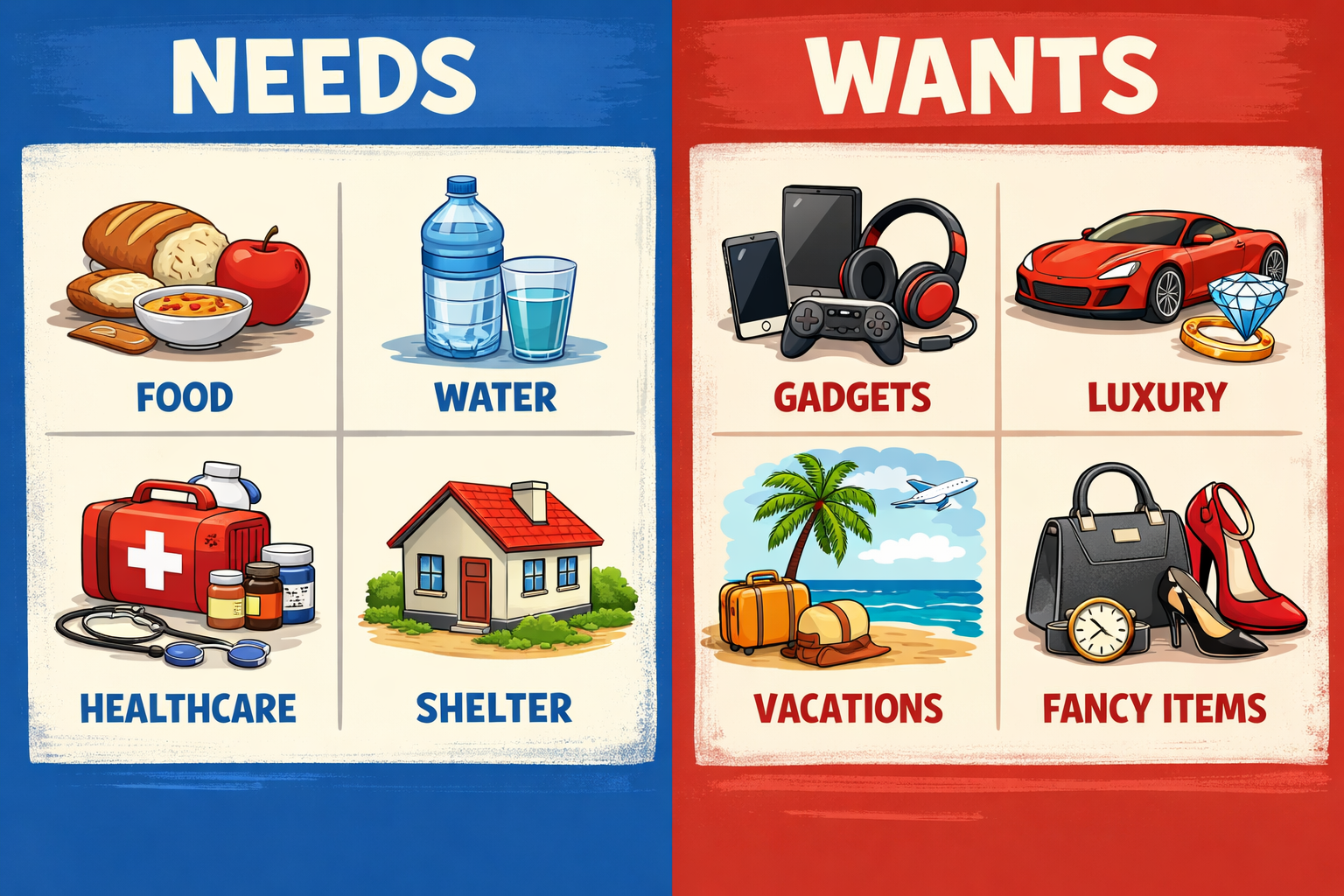
Wants
Wants are things you desire but don’t absolutely need to survive. Spending on wants is optional and can be postponed.
Examples of wants:
- Dining out
- Shopping for clothes or gadgets
- Entertainment (movies, games)
- Luxury vacations
Key point: Budgeting works best when you prioritize needs first, then allocate money for wants and savings.
Step 1: Track Your Income and Expenses
Before budgeting, know how much money you earn and where it goes.
Example:
Sara earns $2,000 per month.
Expenses:
- Needs: $1,200 (rent, food, bills)
- Wants: $600 (shopping, entertainment)
- Savings: $200
Tracking shows if she overspends on wants or neglects savings.
Step 2: Categorize Every Expense

Go through your bills and purchases and classify them as needs or wants.
Example:
| [Expenses] | [Category] |
| Rent | Need |
| Electricity bill | Need |
| Groceries | Need |
| Netflix subscription | Want |
| New smartphone | Want |
This helps identify areas where money can be saved or adjusted.
Step 3: Use the 50/30/20 Rule (with Needs vs Wants)

A popular beginner-friendly budget method:
- 50% for Needs
- 30% for Wants
- 20% for Savings & Investments
Example:
Income = $2,000
- Needs: $1,000
- Wants: $600
- Savings: $400
This ensures essentials are covered, while still leaving room for enjoyment and future goals.
Step 4: Prioritize Needs Over Wants
Always pay for essentials first. Avoid spending on wants before needs are met.
Example:
Philip wants to buy a $200 gaming console, but his rent and bills are not fully paid. He postpones the console purchase until essential expenses are covered.
This habit prevents debt and builds financial discipline.
Step 5: Adjust Your Wants
Sometimes wants exceed the budget. In this case:
- Limit dining out
- Cut subscription services temporarily
- Shop for deals
- Replace expensive wants with low-cost alternatives
Example:
Instead of $200 on clothes each month, Sara spends $100 on essentials and saves the rest for her goals.
Step 6: Use Needs vs Wants for Savings Growth

Every time you distinguish needs from wants, you create opportunities to save more.
Example:
John tracks his expenses and notices $300 spent on non-essential items monthly. He redirects $200 of that to his emergency fund.
Over one year: $200 × 12 = $2,400 saved
Small changes in wants can significantly boost savings.
