



Let me ask you something straightforward.
Have you ever noticed that two people with the same salary can end up in completely different financial situations? One lives comfortably, has savings, and sleeps peacefully at night. The other is always stressed, living paycheck to paycheck, wondering where the money went.
Same income. Same age. Same city. Completely different results.
Why?
The answer isn’t complicated math or secret investment strategies. It’s something far simpler and far more challenging: behavior.
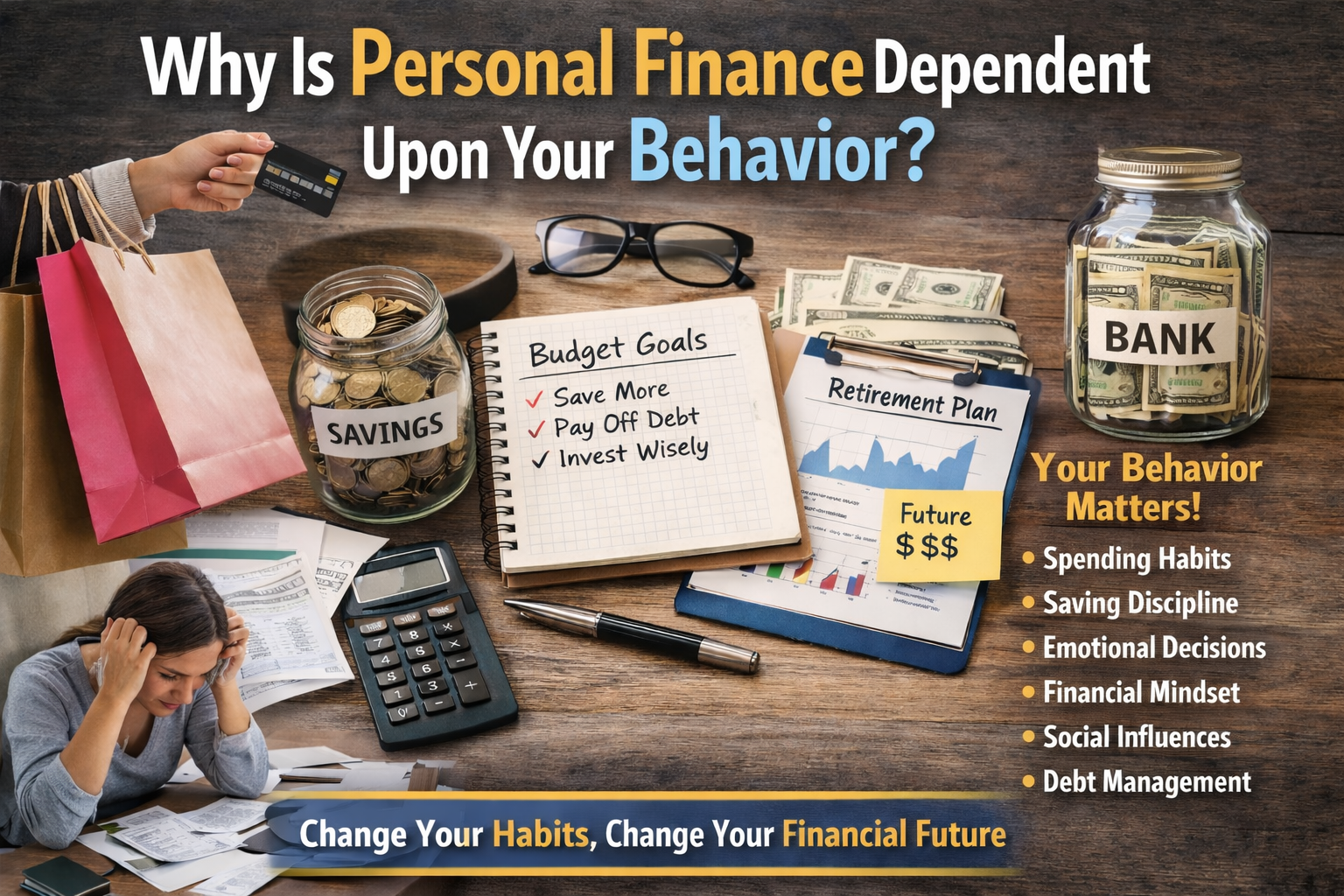
Here is the truth that most financial courses won’t tell you: Personal finance is not really about money. It is about you. The way you think, the way you feel, and the way you act determine your financial destiny far more than any interest rate or market return ever will.
Let me explain why.
Money Decisions Are Never Just About Money
Think about the last time you spent money on something you later regretted. What was driving that decision?
Were you bored? Tired? Stressed? Trying to impress someone? Celebrating?
If you are honest with yourself, the purchase probably had very little to do with the item itself. It had to do with how you were feeling in that moment.
This is the first reason personal finance depends on behavior: We spend money based on emotions, then try to justify it with logic.
You didn’t buy that expensive watch because you needed to tell time. You bought it because it made you feel successful. You didn’t order takeout again because you couldn’t cook. You ordered it because you were exhausted and wanted comfort.
Until you understand that money is emotional, you will keep wondering why your budget never works. The numbers on paper make perfect sense. The numbers in real life get messy because life gets messy, and feelings get involved.
Your Financial Habits Were Set Long Ago
Here is something that might surprise you.
Most of your money habits today were formed before you turned ten years old.
Think back. How did your parents talk about money? Was it a source of stress? Was it never discussed at all? Did they save carefully or spend freely? Did they argue about bills?
You absorbed all of this without realizing it. It became your normal.
If you grew up watching your parents worry constantly about paying bills, you might avoid looking at your bank account today because it triggers that same anxiety. If you saw money used as a weapon or a source of control, you might have developed complicated feelings about spending and saving.
If money was never discussed, you might have learned that it’s rude to talk about finances, which means you never ask for help or advice even when you need it.
These are not decisions you made as an adult. These are behaviors programmed into you long ago. And they run your financial life whether you know it or not.
The good news is that once you recognize these patterns, you can start changing them. But first, you have to admit they exist.
Small Actions Matter More Than Big Plans
Everyone loves a dramatic financial story. The person who turned a small investment into a fortune. The family that paid off massive debt in two years. These stories make good headlines.
But they miss the point.
Real financial success is boring. It happens through thousands of small, unexciting decisions made consistently over many years.
Do you pack lunch or eat out? Do you wait for sales or buy full price? Do you automatically save a portion of each paycheck or hope something is left at the end of the month? Do you walk past the store window or go inside?
None of these decisions seem important on their own. A single lunch out won’t ruin you. One impulse buy won’t derail your future.
But here is the thing about behavior: It compounds, just like money.
Small spending habits add up to huge amounts over time. Small saving habits add up even faster. The direction you are heading matters far more than how fast you are moving.
Someone who saves a little every month will eventually have more than someone who saves nothing, even if the second person earns twice as much. That is not math. That is behavior.
The Temptation of Right Now
Let me be honest with you.
Saving money is boring. Spending money is fun. That is just the truth.
When you save, you get nothing today. When you spend, you get something today. Your brain knows this. And your brain prefers rewards now over rewards later. This is not a character flaw. It is how human beings are wired.
Thousands of years ago, if you found food, you ate it immediately because you might not find more tomorrow. Planning for the future was a luxury our ancestors rarely had.
But here is the problem: Your brain still works that way, even though you live in a world with refrigerators, steady paychecks, and retirement accounts.
Every time you choose spending over saving, you are following an ancient instinct. Every time you choose the new phone over the investment account, you are being perfectly human.
But personal finance rewards the opposite behavior. It rewards people who can say no to themselves today so they can say yes to themselves later.
That ability to delay gratification is not something you are born with. It is a behavior you practice. And your entire financial life depends on how good you get at it.

Why Knowledge Alone Is Never Enough
Here is something I want you to really think about.
You probably already know what you should be doing with money. Spend less than you earn. Save for emergencies. Invest for the long term. Avoid unnecessary debt.
None of this is complicated. You could explain it to a teenager in ten minutes.
So if the knowledge is simple and available to everyone, why don’t more people follow it?
Because knowing what to do and actually doing it are two completely different things.
You know you should exercise, but sometimes the couch wins. You know you should eat healthy, but sometimes the burger wins. You know you should save money, but sometimes the shopping trip wins.
This gap between knowledge and action is where behavior lives. You can read every personal finance book ever written. You can follow every expert on social media. You can calculate the perfect budget.
None of it matters if your behavior doesn’t line up.
Financial education is useful. But financial education without behavior change is just entertainment.
What Actually Works
So what do you do about all this?
If personal finance depends on behavior, how do you change your behavior?
Here is what has worked for real people, not what looks good in theory.
First, stop relying on willpower. Willpower runs out. By the end of a long day, after making a hundred decisions, your ability to resist temptation is gone. Instead of fighting this, work around it. Automate your savings so money moves before you have a chance to spend it. Unsubscribe from store emails so you aren’t tempted. Keep your credit card information off shopping sites so buying requires effort.
Second, wait before you buy. When you want something that isn’t necessary, wait. Not forever. Just wait. A day for small things. A week for bigger things. Most of the time, the urge will pass. You will realize you didn’t actually want the item. You just wanted the feeling of wanting it.
Third, watch your triggers. When do you spend money you regret? Late at night when you are tired? After a bad day at work? When you are hanging out with certain friends? Pay attention to these patterns. Once you know your triggers, you can avoid them or prepare for them.
Fourth, give yourself permission to be human. You will make mistakes. Everyone does. The goal is not perfection. The goal is progress. If you slip up, don’t use it as an excuse to give up completely. Just get back on track with your next decision.
The Bottom Line
Personal finance depends on your behavior because money is just a tool. And a tool is only as useful as the person holding it.
You can have the best financial plan in the world written on paper. But if your behavior leads you to abandon it when things get hard, if your emotions drive your spending, if your habits work against your goals, that plan means nothing.
The good news is that behavior can change. Not overnight. Not without effort. But slowly, with awareness and practice, you can build habits that serve you instead of habits that hold you back.
And when that happens, the numbers finally start working in your favor.
Not because you got smarter about money. But because you got better at being the person handling it.
